- Integral Medicine | Alexander Smithers M.D., A.P.1014 N. East Ave.
Sarasota, Fl. 34237941-444-6336 - 1014 N. East Ave.
Sarasota, Fl. 34237941-444-6336 - TestimonialsI became interested in pursuing ozone injections from Dr. Smithers after a friend received the treatments
and recommended it to me. I just finished my second round of injections in my neck, lower back, hips and both knees. I have experienced lower back/hip pain most of my adult life, endured a knee injury while white river rafting in my 20’s and have had progressively worsening neck pain since a car wreck in my early 30’s. For reference I am 47... Read more »
Alex Smithers is not only smart and so helpful with my husband and his knee problems but he helped me with my stomach issues. I would go to him before I tried any other form of medicine. Thank you Alex!!
Doctor Alex has been treating me for severe gut issues. I was tired of going to doctors that didn’t listen to me and would just prescribe a pill not ever trying to get to the real issues I was having. Dr. Alex has listened and treated me holistically and I am feeling great!! Thank you for everything Dr. Alex.
- Testimonials
Dr Smithers is so acute and atuned to what others miss. I had been suffering with abdominal issues for over 20 years getting no help from traditional medicine. He found and correctly treated the issue. Words cannot describe the quality of life that has been restored to me. He’s very caring and takes the time to listen.
I couldn’t be happier with the treatment I received from Dr Smithers. I had been having knee pain for several months, making it difficult to walk for an extended period of time. I finally decided to have Dr Smithers look at it, and he decided to do prolotherapy. After a few treatments, the pain was completely gone. I’m thrilled to have found this clinic! And I highly recommend Dr Smithers!
Hi
I had Prolozone therapy with Dr Alex Smithers. My knees and thumbs were injected due to meniscus issues in my knees and arthritis in my thumbs. Dr Alex was wonderful. He’s very gentle, kind and patient. I’m a very nervous patient and he took his time with me and did his best to make sure I was comfortable. I’m feeling better and continue to expect more and more improvement. I highly recommend Dr Alex and his staff. They... Read more »I would highly recommend Dr. A. Smithers if you are considering an alternative to orthopedic surgery. My shoulder has been in pain for months and after finding out I have some rotor cuff tears, I decided to pursue Prolotherapy with Dr. A. Smithers. The result so far has been outstanding! The first night after the shots was still painful, but woke up the next morning and pain was almost completely gone. I was equally impressed with his attentiveness to answering... Read more »I was told i needed surgery and that i should file for social security disability… I thought my life was over . Thanks to Dr Smithers i didn’t have to do either.. I will be eternally grateful… I’m back at work and looking forward to a bright future..
I became interested in pursuing ozone injections from Dr. Smithers after a friend received the treatmentsand recommended it to me. I just finished my second round of injections in my neck, lower back, hips and both knees. I have experienced lower back/hip pain most of my adult life, endured a knee injury while white river rafting in my 20’s and have had progressively worsening neck pain since a car wreck in my early 30’s. For reference I am 47... Read more »
Uncategorized
Post COVID/Long COVID Treatment
Post Covid/Long Covid Treatment
Post-COVID syndrome also known as long COVID refers to symptoms persisting for more than three weeks after the diagnosis of COVID-19. We reviewed the current evidence on post-COVID syndrome, focusing on its clinical manifestations and addressing the challenges for its management in primary healthcare. The incidence of post-COVID syndrome is estimated at 10–35%, while for hospitalized patients it may reach 85%. Fatigue is the most common symptom reported in 17.5–72% of post-COVID cases, followed by residual dyspnea with an incidence ranging from 10–40%. Mental problems, chest pain, and olfactory and gustatory dysfunction may affect up to 26, 22 and 11% of patients, respectively. More than one third of patients with post-COVID syndrome have pre-existing comorbidities, hypertension and diabetes mellitus being the most common.
We Have one of the most comprehensive Post Covid treatment protocols utilizing a combination of HOCATT ozone sauna, RED Light therapy, Hyperbaric oxygen and more. Our treatments address the immune dysregulation and chronic inflammation that occurs following the illness.
HOCATT™
Hyperthermic Ozone & Carbonic
Acid Transdermal Technology

Optimal Wellness & Vitality – Easiest Way to Detox Toxins & Boost Immune System
THE HOCATT™ IS A SINGLE UNIT DEVELOPED FOR A SINGLE PURPOSE — STRATEGIC WELLNESS AND VITALITY. How does it do this? Using a combination of powerful modalities, the HOCATT™ detoxes the body, improves circulation, boosts energy, and strengthens the immune system. WHY IS THE IMMUNE SYSTEM SO IMPORTANT? When it’s working properly, the immune system is nature’s most perfect healing network — it provides the ideal platform for the recovery of any illness or disease. However, the immune system is not invincible! It can be weakened by things that overburden it, like heavy metals and toxins in the water we drink, the air we breathe, and the food we eat. In today’s world we are all steadily exposed to toxins, and most of us remain unaware as they continue to accumulate. Eventually, the pace of incoming toxins may overtake the pace at which your body can eliminate them. When you reach this point, your body has no choice but to store some of these toxins, which it does in your fat cells. A study done in 2005 found that blood samples from newborns contained an average of 287 known toxins1 — if a newborn is exposed to that many toxins, imagine how many you have been exposed to in your LIFE.
How does the HOCATT Work?
The HOCATT™ delivers a combination of technologies perfectly sequenced to give a gentle, but incredibly powerful session that boosts energy, and detoxifies the body down to cellular level. The main technology is Transdermal Ozone, which is generated from pure Oxygen. You can think of Ozone as a Super-Oxygen!
How does the HOCATT DETOX Your Body?
The HOCATT™ is 7x more effective at detoxifying the body and chelating (binding) heavy metals than conventional saunas! While relaxing in the HOCATT™, the ozonated steam covers your skin, flooding your bodywith Super-Oxygen products! These binds to toxins and heavy metals, making it easier for your body to excrete them, and because the HOCATT™ is also a steam sauna chamber, you get to sweat the toxins out too! Not only does the HOCATT™ detox your body, it also modulates the immune system. It also improves blood and lymph circulation, and enhances all organ function — including the production of hormones and enzymes. The HOCATT™ also reduces stress and anxiety, which is very important for immune health. HOCATT™ MODALITIES: Each session is just 30 minutes long, which is another great thing about the HOCATT™ — it allows you to do everything you need to do to achieve optimal wellness and vitality, or to reach a peak state of performance, and it delivers this to you ALL AT THE SAME TIME, for just 30 minutes out of your day! The HOCATT™ has tremendous VALUE: Not only do you receive so many modalities in one session, but because of the way these modalities support and potentiate one
another — you get twice the results! There is nothing else on the market that can do what the HOCATT™ does — and REMEMBER! You don’t have to be sick to benefit: whether you’re ill, an athlete looking to boost performance, or just a healthy person concerned with prevention or looking to get even healthier and detox your system, the HOCATT™ will benefit you.
- Increases circulation
- Modulates the Immune System
- Antioxidant through Hormetic effect
- Increases oxygen level and metabolism (anti-aging)
- Combats and disposes of pathogens and toxins (detox)
- Increases energy level
- Increases serotonin levels (relaxing)
- Activates skin tissue
- Burns up to 600 calories per session
- Improves memory and brain function
- Promotes smooth skin tone
- Improves digestion and bowel health
- Naturally stimulates anti-oxidant enzyme production
- Aids in the relief of chronic health problems
WHAT IS METABOLIC ENDOTOXEMIA

Metabolic endotoxemia is linked to a broad range of chronic conditions, from heart disease and autoimmunity to anxiety, insomnia and depression. It is also common trigger of insulin resistance diabetes and weight gain. It is marked by an increase in serum LPS during the first five hours following meal consumption. LPS are large molecules found in the outer membranes of pathogenic gram-negative bacteria. If they cross over from the gut Lumen into the bloodstream, they can elicit a strong immune response. This condition is particularly problematic in patients with intestinal permeability, which increases the risk of systemic inflammation. The bovine derived immunoglobulins in Gut Food & Repair by Biome and Beyond, convey powerful anti-inflammatory in immunomodulatory effects in humans. The research shows that colostrum can restore a leaky gut lining to normal permeability levels and the immunoglobulins present are especially impressive at combating gut pathogens, including h-pylori, E coli and protozoan parasites and amoebas. Visit www.biomeandbeyond.com for more information or call us today at 941-444-6336.
Low-Carbohydrate Diet Superior to Antipsychotic Medications
A Cutting-Edge Conference
This summer, I was fortunate to participate in the groundbreakingInternational Society for Nutritional Psychiatry Research(ISNPR) conference held in Bethesda, Maryland. The meeting was truly inspiring and exciting to those of us who believe that nutritional approaches are the way forward in the treatment of mental healthdisorders. While the majority of the presentations at this conference were focused on omega-3 fatty acids, microbiome research, micronutrients, and the Mediterranean diet, there were a few small breakout sessions exploring the potential benefits of ketogenic diets. Ketogenic diets are special low-carbohydrate diets that have been used to treat epilepsy for almost 100 years and show great promise in the management of a wide variety of other brain disorders.
Psychosis, Mood, and Diet
One of the presentations I attended was by Dr. Chris Palmer, a psychiatrist from Harvard’s McLean Hospital in Belmont, Massachusetts. In a small room packed with curious doctors, scientists and nutritionists from around the world, Dr. Palmer described the experiences of two adults in his practice with schizoaffective disorder who had tried a ketogenic diet. Whereas schizophrenia is characterized primarily by psychotic symptoms, people with schizoaffective disorder have to cope not only with psychosis but also with overlapping periods of severe mood symptoms. Signs of psychosis include paranoia, auditory hallucinations, visual hallucinations, intrusive thoughts/images, and/or disorganized thinking. Mood episodes may include depression, euphoria, irritability, rage, suicidal thoughts, and/or mood swings. As a practicing psychiatrist for more than 15 years, I can tell you that schizoaffective disorder is a particularly challenging diagnosis for people to live with and for psychiatrists to treat. Even the most potent antipsychotic and mood stabilizing medications available often don’t bring sufficient relief, and those medications come with a significant risk of side effects.
Below I’ve summarized the cases Dr. Palmer presented. More details of each story, along with Dr. Palmer’s commentary are published in the journal Schizophrenia Research.
Case Number One: A Woman Finds Natural Relief
The first story is of a 31-year-old woman who was diagnosed with schizoaffective disorder eight years ago. Trials of TWELVE different medications, including Clozapine, a powerful antipsychotic agent considered by many psychiatrists to be the medication of last resort due to its risk of serious side effects, were unsatisfactory. She had also undergone 23 rounds of electroconvulsive therapy (ECT or what used to be called “electric shock treatments”), yet remained troubled by serious symptoms. She decided to try a ketogenic diet with the hope of losing some weight. After four weeks on the diet, her delusions had resolved and she’d lost ten pounds. At four months’ time, she’d lost 30 pounds and her score on a clinical questionnaire called the PANSS (Positive and Negative Symptom Scale), which ranks symptoms on a scale from 30 (best) to 210 (worst), had come down from 107 to 70.
Case Number Two: A Man Comes to Life
The second story is of a 33-year-old single man diagnosed with schizoaffective disorder fourteen years ago. Over the years he had tried SEVENTEEN different psychiatricmedications with limited success, including Clozapine. Weighing 322 pounds, he decided to embark on a ketogenic diet for weight loss.
Within three weeks, he reported “dramatic” reduction in auditory hallucinations and delusions, as well as better mood, energy, and concentration. Over the course of a year, he lost a total of 104 pounds. When in ketosis, his PANSS scores improved significantly—falling from 98 to only 49. His daily function and quality of life also improved dramatically; he moved out of his father’s home, began dating, and started taking college courses.
Interestingly, in both cases, each time either of these individuals went off of the ketogenic diet, their symptoms worsened, and when they went back on the diet, their symptoms improved again, suggesting it was the diet and not some other factor that was responsible.
Food vs. Medication
These outcomes are truly remarkable: improvement by dozens of points on the PANSS, significant weight loss, and better quality of life. There simply is no psychiatric medication available with the power to accomplish those results. I have certainly seen antipsychotic medications help people with bipolar and psychotic symptoms, and sometimes help dramatically. However, all antipsychotic medications, unfortunately, come with a substantial risk of side effects that can worsen quality of life, not the least of which is weight GAIN.
All antipsychotic medications (Abilify, Zyprexa, Risperdal, Seroquel, Clozapine, etc.) can contribute to high insulin levels and insulin resistance —a hormonal shift in metabolism that makes it harder for the body to process carbohydrates. Over time, insulin resistance can lead to weight gain, type 2 diabetes, heart disease, and even Alzheimer’s disease. In stark contrast, ketogenic diets have many positive side effects; they lower insulin levels and improve insulin sensitivity, reversing signs of insulin resistance and associated conditions.
What is the Ketogenic Diet?
A ketogenic diet is an ultra-low-carbohydrate diet (maximum 20 grams of carbohydrate per day) that is typically much higher in fat than other diets. This diet is designed to lower and stabilize insulin levels, allowing the body to burn fat more easily, and rely less on glucose (blood sugar) for energy. Fat is broken down into ketones, which most cells in the brain can use for energy instead of glucose. Ketones burn more cleanly and efficiently than glucose, resulting in less inflammation and oxidation throughout the brain and body.
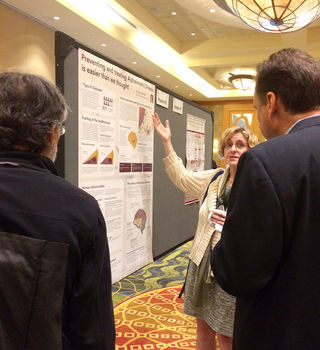
There are many theories as to why ketogenic diets seem to be so healing and stabilizing for brain cells, some of which you can read about in this article about bipolar disorder and ketogenic diets. I have studied, written about and personally followed a ketogenic diet for the better part of the past five years, and recommend it to my patients as an alternative and/or add-on option to medication. At the ISNPR conference, I presented a poster summarizing exciting nutritional approaches to Alzheimer’s disease prevention and treatment, including ketogenic diets.
Ketogenic Diets and Other Psychiatric Disorders
Earlier this summer, I wrote an article for Psychology Today entitled Ketogenic Diets for Psychiatric Disorders summarizing studies and case reports of how low-carbohydrate and ketogenic diets affect people with psychiatric disorders including bipolar disorder, autism, and schizophrenia. That review includes the remarkable account of a woman who had suffered with psychotic symptoms for 63 years before finally experiencing relief on a low-carbohydrate diet.
Although we only have a handful of published examples so far, the information within them is full of promise for people who have been suffering from life-altering psychiatric disorders and health-compromising medications.
Hope Beyond Medication
Most people don’t realize that options beyond medication exist. It is critical that we spread awareness of these potentially powerful dietary strategies to everyone who may benefit. If you know of someone who is coping with mental illness, please share these inspiring stories with them.
If you yourself are struggling with symptoms of a mood or thought disorder, I encourage you to learn more about ketogenic diets and other nutritional approaches. Yes, medications can play a very important role in your care, but I believe that the most powerful way to change your brain chemistry is through food—because that’s where brain chemicals come from in the first place! Feeding your brain properly has the potential to get to the actual root of the problem, which may allow you to reduce the amount of medication you need to feel well and function at your best. In some cases, a ketogenic diet can even completely replace medications.
Nutritional psychiatry can empower you to take more control of your symptoms, your overall health, and the course of your future.
*Note: low-carbohydrate diets cause significant changes in body chemistry very quickly. If you take any medications or have any health problems, please do not start this diet without first consulting with your health care provider, as medication dosages may need to be closely monitored as you transition to a new way of eating. Please see this short post about the safety of ketogenic diets for more information.

-
 SHARE
SHARE -
 TWEET
TWEET -
 EMAIL
EMAIL -
 MORE
MORE
About the Author

Georgia Ede, MD, is a Harvard-trained psychiatrist and nutrition consultant practicing at Smith College. She writes about food and health on her website DiagnosisDiet.com.
Probiotic Reduces Depression and Alters Brain Activity in IBS
Gastroenterology
Happy bacteria?
Irritable bowel syndrome (IBS) has a strong mind–gut connection. Depression and anxiety often correlate with the severity of symptoms. But can the microbiome influence depression and anxiety through the reverse gut–brain connection?
This small pilot study randomized 44 patients with IBS to receive either Bifidobacterium longum or placebo for 6 weeks. Depression and anxiety scores were followed at 0, 6, and 10 weeks, and functional MRI was performed at 6 weeks.
Depression scores (but not anxiety) improved, and functional MRI showed a down regulation of fear in the amygdala and frontolimbic areas of the brain, which correlated with the improvement in depression scores.
How might bacteria influence mood?
There were no significant differences in taxonomy of the microbiome in either group, and there was no difference in inflammatory markers. But there was a change in catecholamine metabolites seen in stool samples. The authors suggest that the bacteria may influence dopamine and norepinephrine as a pathway to improve mood through the central nervous system. Of concern were the low depression scores in the placebo group at baseline. The improvement in depression scores in the B. longum group could have been due to the regression to the mean.
Here is what we believe we know
Previous research suggests the Bifidobacterium species (more than Lactobacillus species) have a beneficial influence on IBS symptoms.1,2 Eating a high-fiber, low-fat diet promotes the growth of Bifidobacterium species.3 Mind–gut therapies like gut-directed hypnotherapy work really well,4 and even open-label placebos work on IBS!5
As with all diseases, therapy is complicated and requires that we adapt to the unique ecosystem that presents with each clinical encounter. Research like this reminds us of this complexity and that there really are no clear separations between gut and mind. It’s all interconnected.
References
- Camilleri M. Probiotics and irritable bowel syndrome: rationale, putative mechanisms, and evidence of clinical efficacy. J Clin Gastroenterol. 2006;40(3):264-269. http://journals.lww.com/jcge/Abstract/2006/03000/Probiotics_and_Irritable_Bowel_Syndrome_.20.aspx
- Ford AC, Quigley EM, Lacy BE, et al. Efficacy of Prebiotics, Probiotics, and Synbiotics in Irritable Bowel Syndrome and Chronic Idiopathic Constipation: Systematic Review and Meta-analysis. Am J Gastroenterol. 2014;109(10):1547-1561. https://www.nature.com/ajg/journal/v109/n10/full/ajg2014202a.html
- Ridaura VK, Faith JJ, Rey FE, et al. Gut microbiota from twins discordant for obesity modulate metabolism in mice. Science. 2013;341(6150):1241214. http://science.sciencemag.org/content/341/6150/1241214
- Lindfors P, Unge P, Arvidsson P, et al. Effects of gut-directed hypnotherapy on IBS in different clinical settings-results from two randomized, controlled trials. Am J Gastroenterol. 2012;107(2):276-285. https://www.nature.com/ajg/journal/v107/n2/full/ajg2011340a.html
- Kaptchuk TJ, Friedlander E, Kelley JM, et al. Placebos without deception: a randomized controlled trial in irritable bowel syndrome. PLoS One. 2010;5(12):e15591. http://journals.plos.org/plosone/article?id=10.1371/journal.pone.0015591
Abstract
This abstract is available on the publisher’s site.
BACKGROUND & AIMS
Probiotics can reduce symptoms of irritable bowel syndrome (IBS), but little is known about their effects on psychiatric comorbidities. We performed a prospective study to evaluate the effects of Bifidobacterium longum NCC3001 (BL) on anxiety and depression in patients with IBS.
METHODS
We performed a randomized, double-blind, placebo-controlled study of 44 adults with IBS and diarrhea or a mixed-stool pattern (based on Rome III criteria) and mild to moderate anxiety and/or depression (based on the Hospital Anxiety and Depression scale) at McMaster University in Canada, from March 2011 to May 2014. At the screening visit, clinical history and symptoms were assessed and blood samples were collected. Patients were then randomly assigned to groups and given daily BL (n=22) or placebo (n=22) for 6 weeks. At week 0, 6 and 10, we determined patients’ levels of anxiety and depression, IBS symptoms, quality of life, and somatization using validated questionnaires. At week 0 and 6, stool, urine and blood samples were collected, and functional magnetic resonance imaging (fMRI) test was performed. We assessed brain activation patterns, fecal microbiota, urine metabolome profiles, serum markers of inflammation, neurotransmitters and neurotrophin levels.
RESULTS
At week 6, 14/22 patients in the BL group had reduction in depression scores of 2 points or more on the Hospital Anxiety and Depression scale, vs 7/22 patients in the placebo group (P=.04). BL had no significant effect on anxiety or IBS symptoms. Patients in the BL group had a mean increase in quality of life score compared with the placebo group. The fMRI analysis showed that BL reduced responses to negative emotional stimuli in multiple brain areas, including amygdala and fronto-limbic regions, compared with placebo. The groups had similar fecal microbiota profiles, serum markers of inflammation, and levels of neurotrophins and neurotransmitters, but the BL group had reduced urine levels of methylamines and aromatic amino acids metabolites. At week 10, depression scores were reduced in patients given BL vs placebo.
CONCLUSION
In a placebo-controlled trial, we found that the probiotic BL reduces depression but not anxiety scores and increases quality of life in patients with IBS. These improvements were associated with changes in brain activation patterns that indicate that this probiotic reduces limbic reactivity.
Benefits of Omega-3 Fatty Acids From Fish Oil After Acute MI (Heart Attack)
What is the deal with omega-3 supplements?
Omega-3 fatty acid has been shown to reduce death post-MI in some studies; but, yet, in other studies, it has no effect. So does it work or not?
In this study, instead of looking at hard endpoints like death or MI, the researchers used cardiac MRI to look for subtle changes in the myocardium. It was a small study of 358 post-MI patients. Half of the participants received 4 gm of omega-3 supplements, and, after 6 months, these patients had less non–infarct related myocardial fibrosis. They also had a reduced left ventricular systolic volume index by 5.8%. They had lower inflammatory markers in their blood, and the higher the levels of omega-3, the better the results; so, the effect seen with omega-3 seemed to be dose-dependent.
Now, before we go betting the farm on omega-3 supplements, let’s go back to some basics of what omega-3 fatty acids really are.
Fatty acids are long chains of carbons with hydrogens attached to them. The tail is referred to as the omega end. These fatty acids are named by where the first double bond is between the carbons. So, omega-3 means that the first double bond is at the third carbon counted from the tail end, the omega end. Omega-6 is a fatty acid that has the first double bond at the sixth carbon.
Both omega-3 and -6 are essential fatty acids, meaning that our bodies cannot make them so we need to eat them in our diet. Many chemicals needed by the body are made from both omega-3 and -6. However, one family of chemicals that can be produced from them is called eicosanoids. This family includes some very familiar chemicals like leukotrienes (inflammation), thromboxane (blood clots), and prostaglandins, which cause inflammation and other effects in the body.
Omega-6 is processed in the body much faster than omega-3, and so it creates more “bad” chemicals. A lot of omega-6 produces a lot of bad chemicals, but more omega-3 counterbalances this, which is why we think of omega-3 as good. In reality, however, omega-3 is simply not as bad as omega-6. Experts believe that we should be eating at a 1:1 ratio of omega-6 to omega-3.
Unfortunately, our western diet is more like 10:1 to 30:1 of omega-6 to omega-3. Too much omega-6 means we make a lot of inflammatory and thrombotic chemicals. Our diet has evolved to higher omega-6 content over the years. For example, corn oil is 46:1 omega-6 to omega-3. The ratio in grass-fed cows is 2:1, but it is more like 4:1 in grain-fed cows. There is less omega-3 in grains than in grass, and so grain-fed cows have less omega-3.
Perhaps to make sense of these studies we need to look at the omega-6 to omega-3 ratios. In the old studies, 1 gm of omega-3 was given to the participants, but if the participants had ratios of 30:1 then that 1 gm would not have had any impact. So, perhaps using the ratio to separate out the patients may give us more consistent outcomes.
For now, how should we improve the ratio? Omega-3 is made in plants, seaweed, and algae. So we can eat more plant-based foods and seaweed. Fish eat the algae, which is how they become rich in omega-3, so we can eat fish. Some estimates put omega-3 at seven times the level of omega-6 in fish; but, remember, that the larger the fish, the greater the amounts of heavy metals they accumulate. So, we should not eat too much of the big fish like tuna but perhaps should focus more on the small, oily fish, which have not lived long enough to accumulate these toxins. For meat, we should try for that from grass-fed livestock.
Perhaps the key is to balance our omega-3 and -6. Maybe it’s simpler to just take a supplement as was done by participants in this study; but, for the majority of us, perhaps we should choose foods that have a better ratio of omega-3 to omega-6. Remember, we can’t make these so our bodies will have to use what we eat. So choose wisely.
Abstract
This abstract is available on the publisher’s site.
BACKGROUND
Omega-3 fatty acids from fish oil have been associated with beneficial cardiovascular effects, but their role in modifying cardiac structures and tissue characteristics in patients who have had an acute myocardial infarction while receiving current guideline-based therapy remains unknown.
METHODS
In a multicenter, double-blind, placebo-controlled trial, participants presenting with an acute myocardial infarction were randomly assigned 1:1 to 6 months of high-dose omega-3 fatty acids (n=180) or placebo (n=178). Cardiac magnetic resonance imaging was used to assess cardiac structure and tissue characteristics at baseline and after study therapy. The primary study endpoint was change in left ventricular systolic volume index. Secondary endpoints included change in noninfarct myocardial fibrosis, left ventricular ejection fraction, and infarct size.
RESULTS
By intention-to-treat analysis, patients randomly assigned to omega-3 fatty acids experienced a significant reduction of left ventricular systolic volume index (–5.8%, P=0.017), and noninfarct myocardial fibrosis (–5.6%, P=0.026) in comparison with placebo. Per-protocol analysis revealed that those patients who achieved the highest quartile increase in red blood cell omega-3 index experienced a 13% reduction in left ventricular systolic volume index in comparison with the lowest quartile. In addition, patients in the omega-3 fatty acid arm underwent significant reductions in serum biomarkers of systemic and vascular inflammation and myocardial fibrosis. There were no adverse events associated with highdose omega-3 fatty acid therapy.
CONCLUSIONS
Treatment of patients with acute myocardial infarction with high-dose omega-3 fatty acids was associated with reduction of adverse left ventricular remodeling, noninfarct myocardial fibrosis, and serum biomarkers of systemic inflammation beyond current guidelinebased standard of care.